
Serving Suggestions
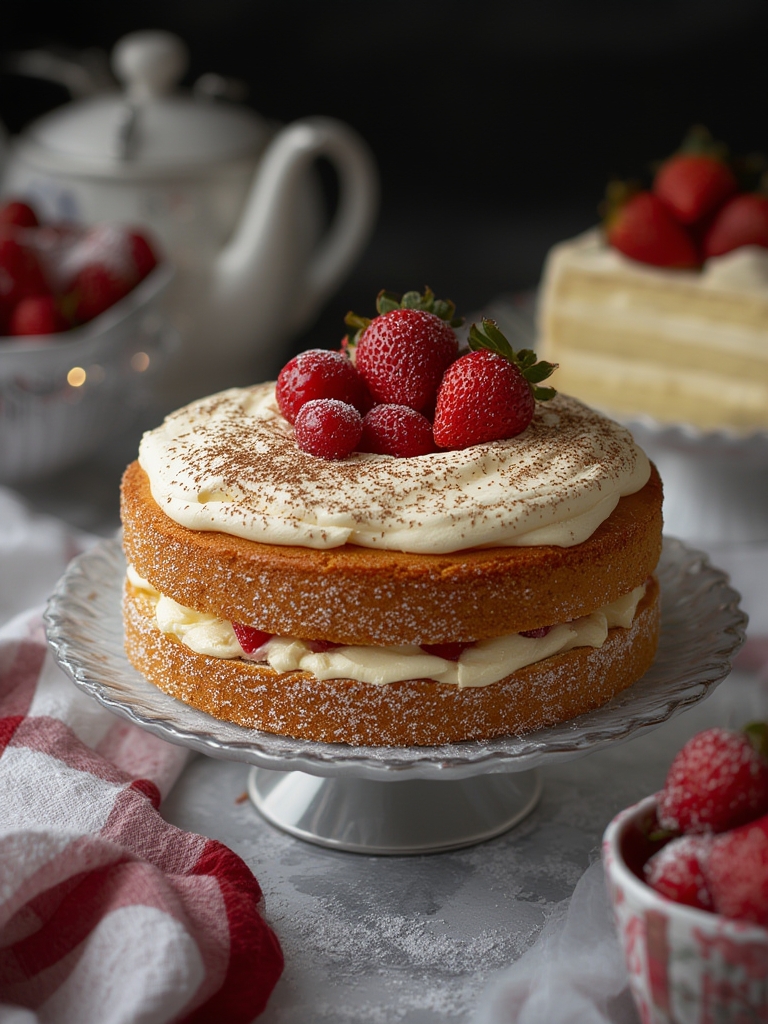
Serve your Victoria Sponge on a vintage cake stand with:
- Earl Grey or Darjeeling tea
- Fresh berries on the side
- A dollop of extra cream
- Mint sprigs for a pop of color
Common Mistakes to Avoid
- Cold ingredients: Ensure butter and eggs are at room temperature for proper incorporation
- Opening the oven door too early, causing the cake to sink
- Overmixing the batter after adding flour
- Assembling while still warm, which melts the cream
Storing Tips
- Room temperature: Consume within 2 days, stored under a cake dome
- Refrigerated: Up to 5 days in an airtight container
- Freezer: Unfilled sponge layers freeze well for up to 3 months
- Make-ahead tip: Bake layers up to 2 days before assembling
Conclusion
The Victoria Sponge remains timeless for good reason—it’s simple, elegant, and utterly delicious. This classic victoria sponge recipe strikes the perfect balance between tradition and accessibility. Try it this weekend and share your results in the comments below!
FAQs
Why did my Victoria Sponge sink in the middle?
This usually happens when the oven door is opened too early or the cake is underbaked. Ensure you wait until at least 20 minutes before checking.
Can I use margarine instead of butter?
Yes, but the flavor won’t be as rich. If using margarine, choose a high-fat variety (at least 75% fat) for best results.
What’s the difference between Victoria Sponge and Victoria Sandwich?
They’re the same dessert! The term “sandwich” refers to how the cake is filled with jam and cream between two layers.
Why is my sponge dense rather than light and fluffy?
This could be due to insufficient creaming of butter and sugar, overmixing after adding flour, or inaccurate measurements. Using digital scales helps ensure precision.